E-Book Publikasi
Collective Action of Women in Building Accountability
Ditulis oleh Famm Indonesia
·
Terbit: July 2026
·
52 Halaman
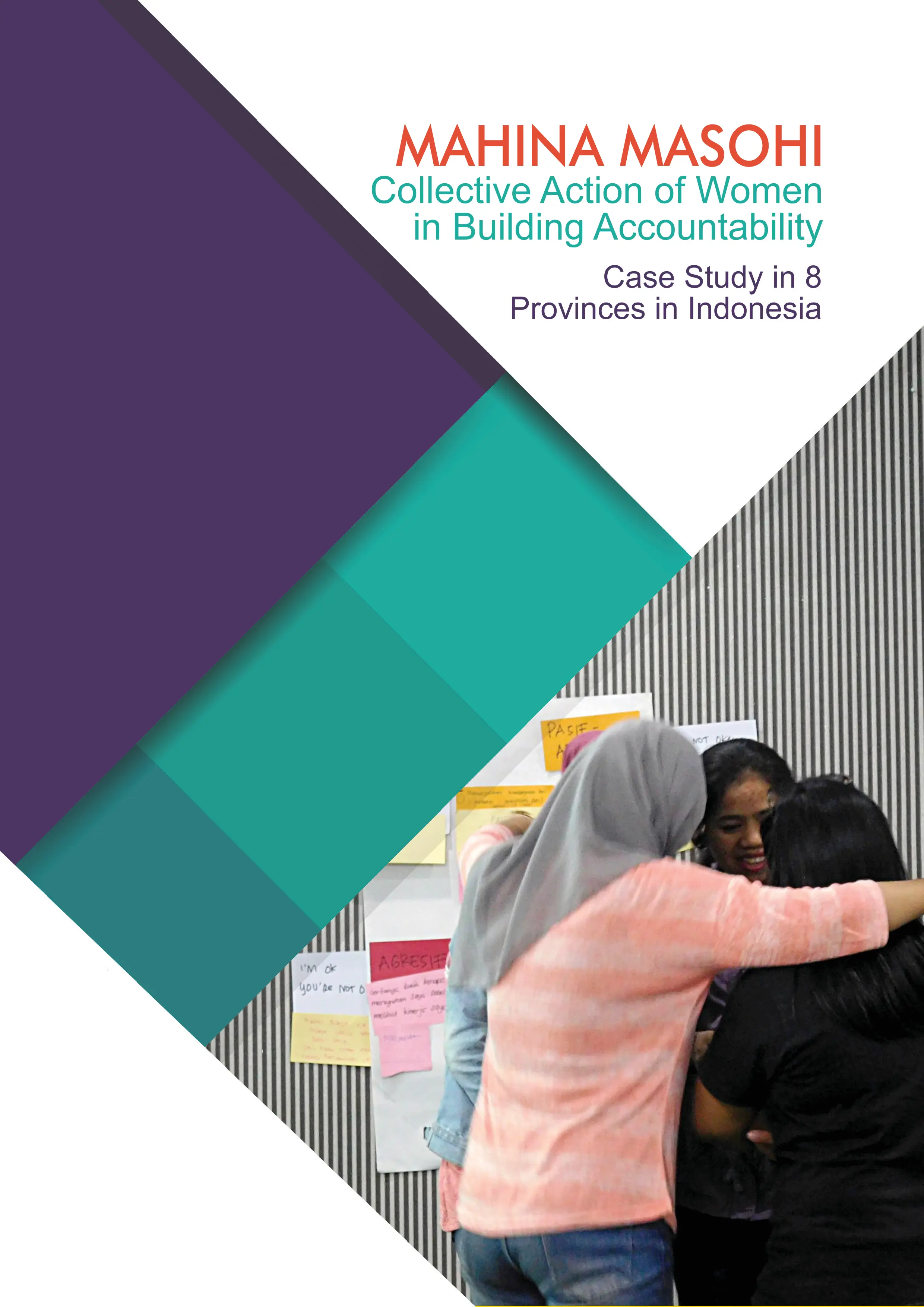
Deskripsi Buku
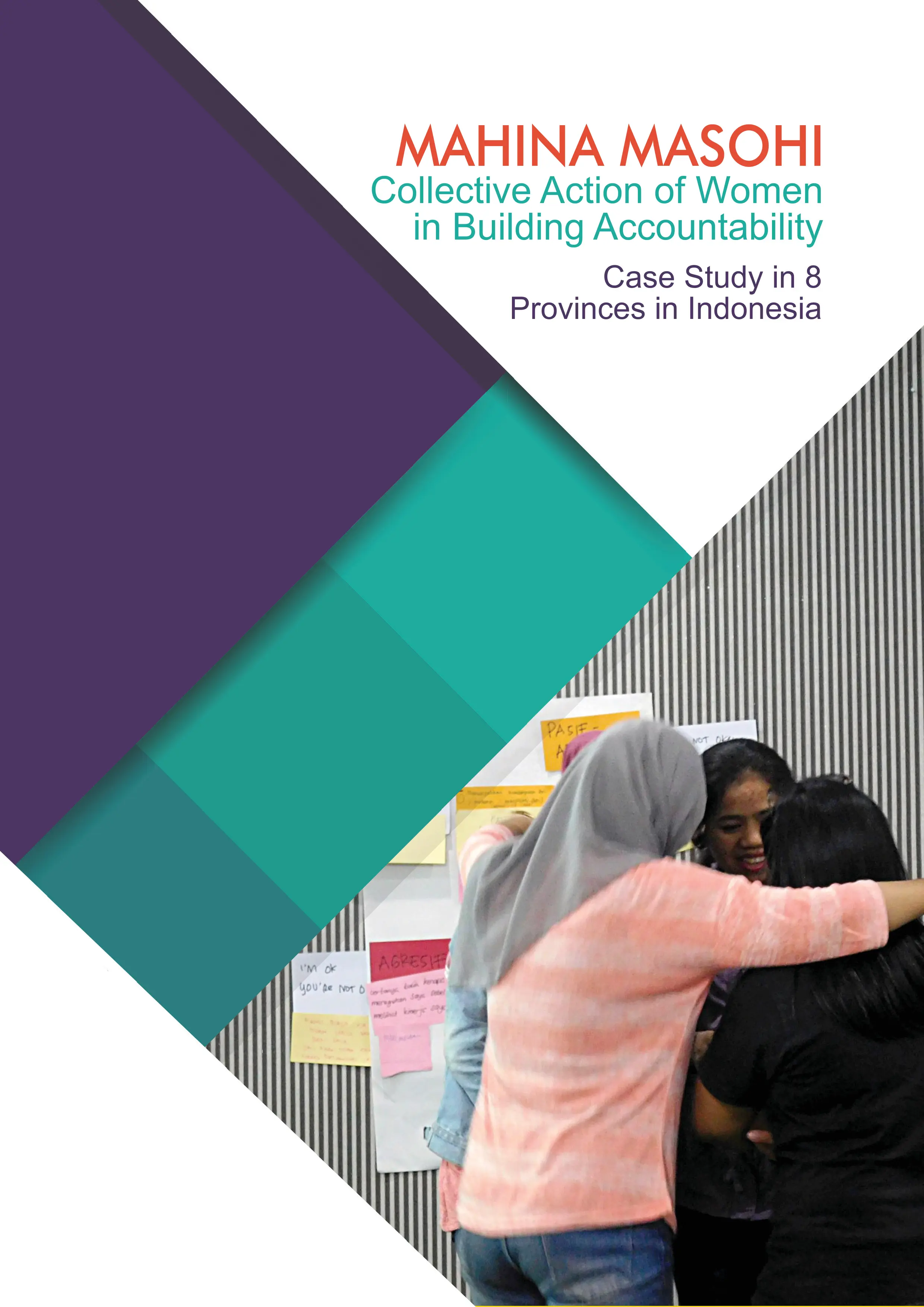
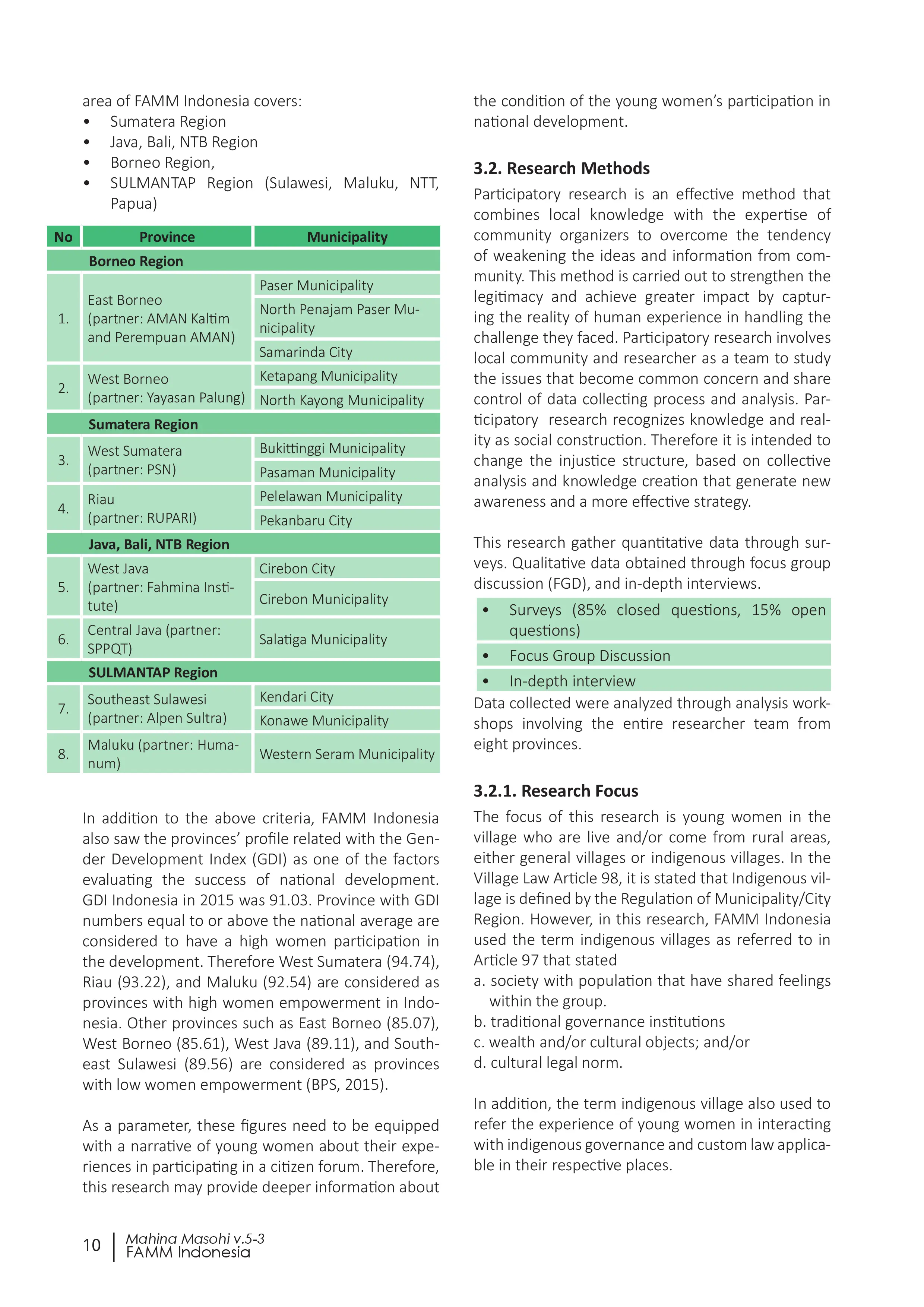
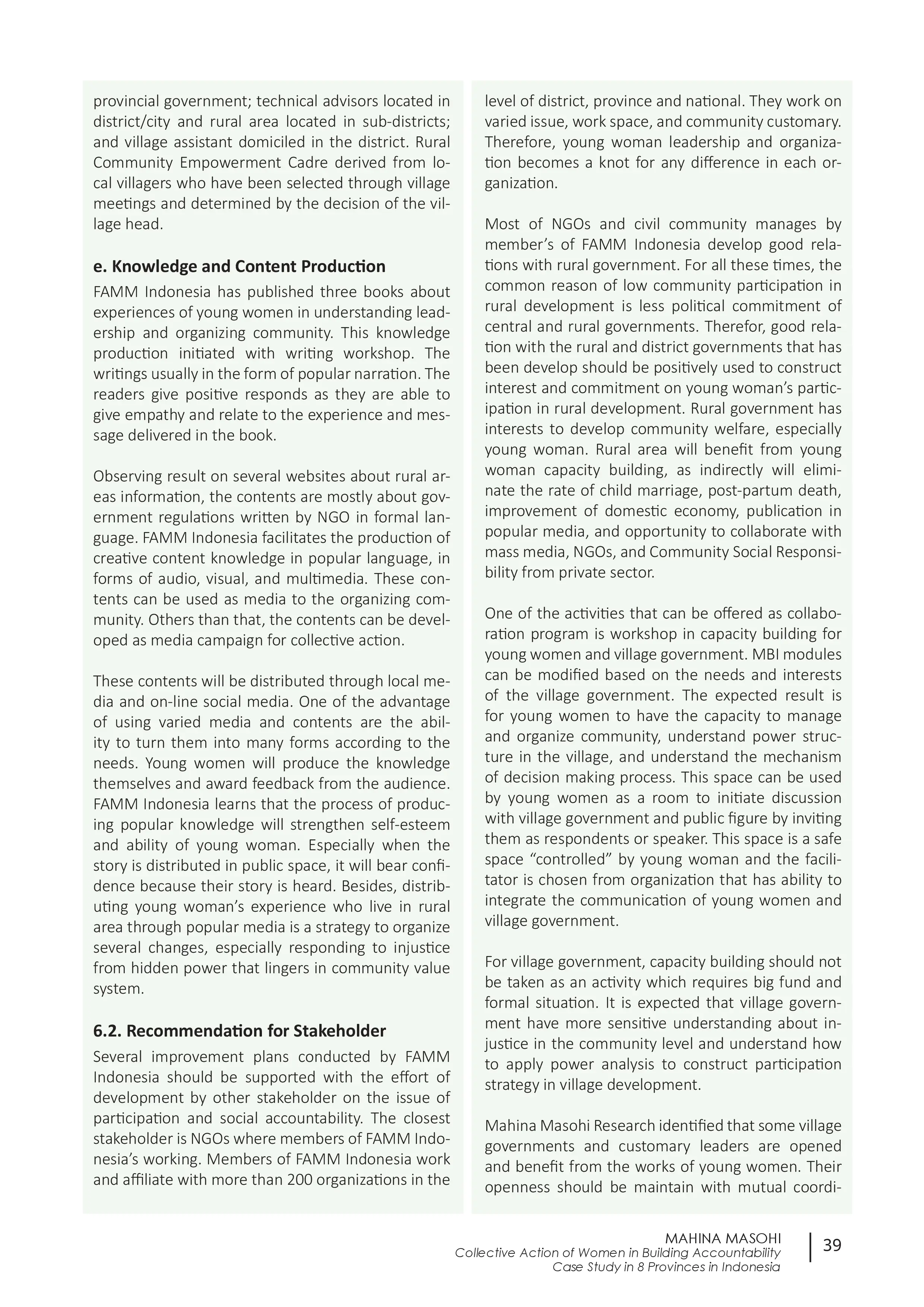
Mahina Mahosi research aims to raise the voice ofyoung women in rural areas in interpreting the par-
ticipation and social accountability. This research
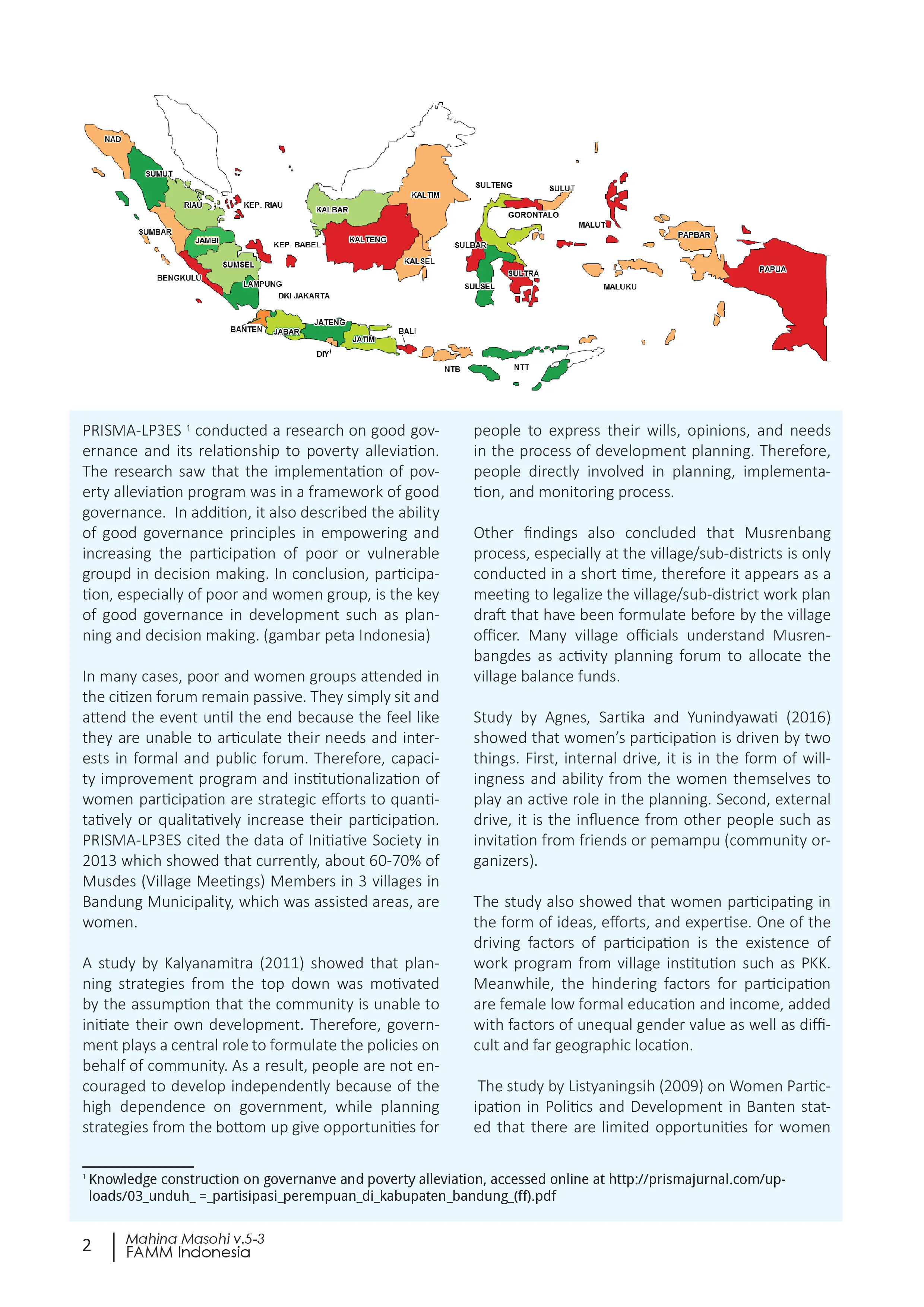
was conducted in 8 provinces in Indonesia partnered
with 8 local Non-Government Organization (NGO),
they are Pusat Studi Nagari (West Sumatra), RUPARI
(Riau), Fahmina Institute (West Java), SPPQT (Central
Java), Yayasan Palung (West Borneo), AMAN Kaltim
(East Borneo), HUMANUM (Maluku), and Alpen
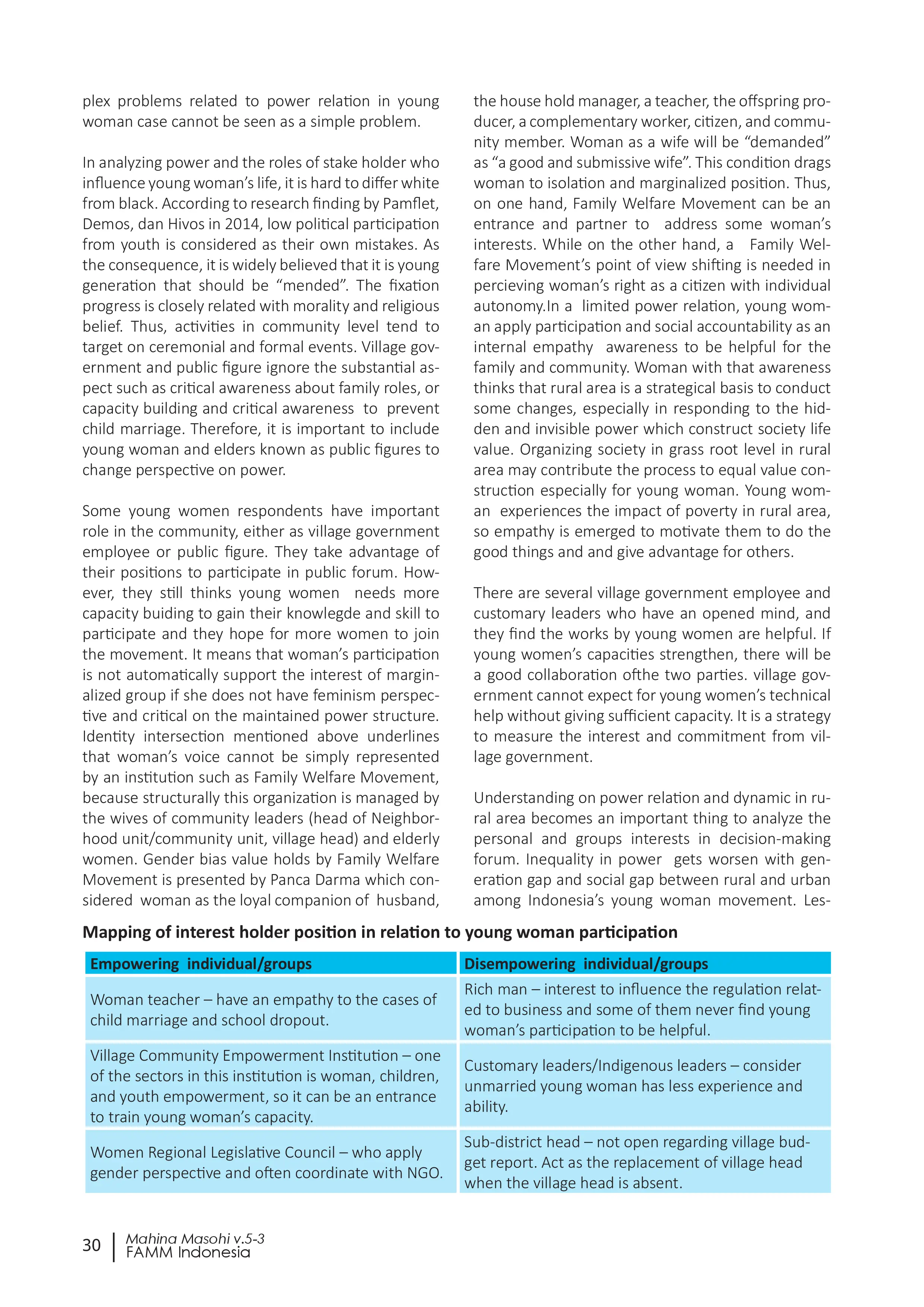
(Southeast Sulawesi). FAMM Indonesia used the in-
tersectionality theory and power analysis to explore
the participation dynamics and interpret organizing
in the grassroots movements.
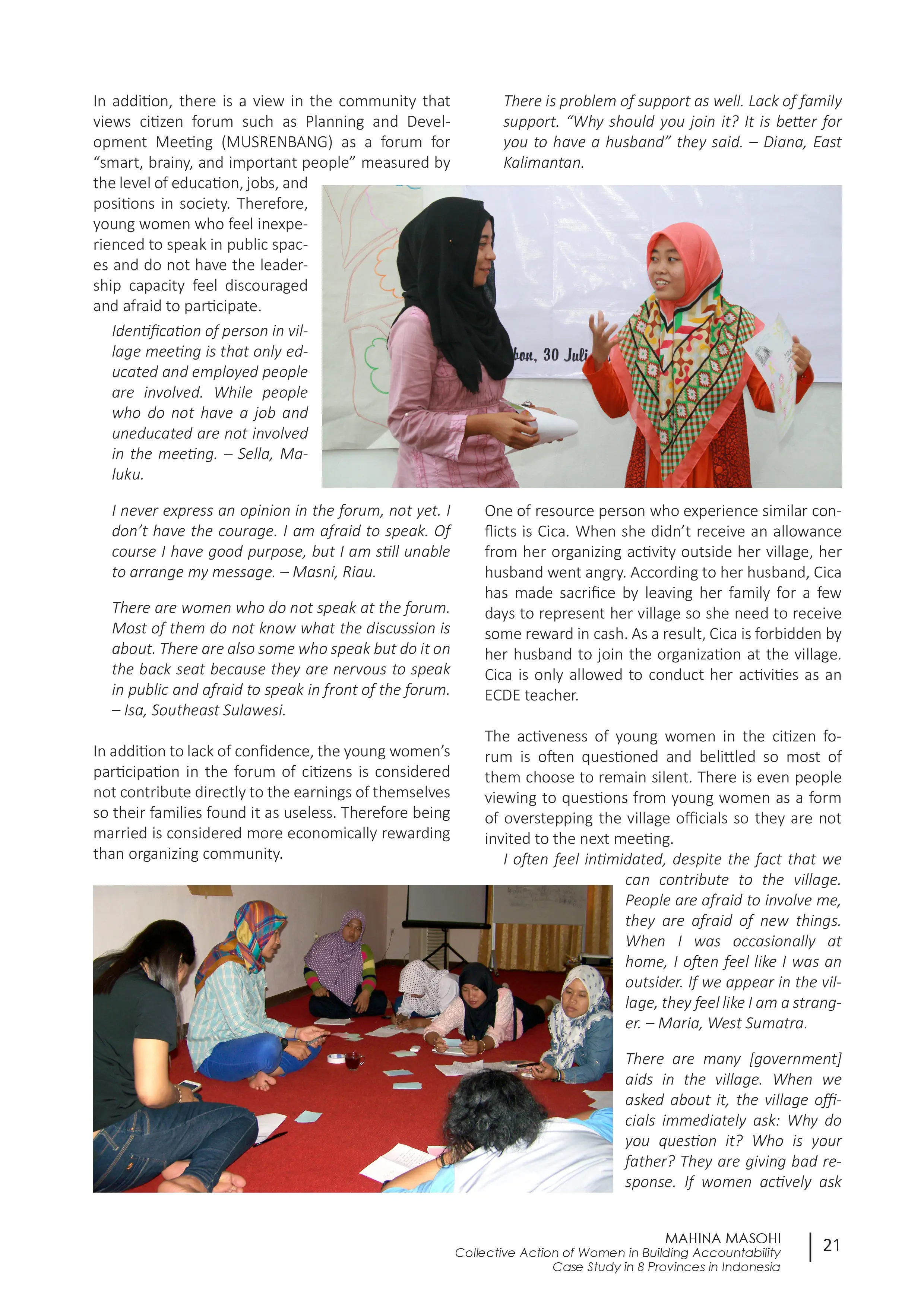
This study found that young women are very enthu-
siastic to involve in various community forums such
as Karang Taruna, planning and development meet-
ing (Musrenbang), as well as other forum such as
Koran recitation, social gathering, and other small
group. However, due to the capacity constraint,
young-age-related stereotype, and negative respon-
se from the village officers, they are not allowed to
actively participate in discussion and decision mak-
ing. As a result, young women organizing the citi-
zen and their interest in peer group/forum which
mainly involving local NGO as a facilitator. The voices
of young women in this peer group have not been
considered as part of social accountability, therefore
its influence has not been significant in the decision
making process in the village.
Young women always take a role in the development,
either it is the role of reproduction, production, and
community. As part of the community, young women
are working across issues and participate in voicing
the interests of their group, such as advocating the
availability of clean water, preventing child marriage,
accessing free educational aid, and collecting the
data of poor people. For young women, participa-
tion and social accountability is a part of observance,
trust, empathy and opportunity to do good to fellow
human beings. If they are given the opportunity and
space to grow, they will become force to support ru-
ral development.
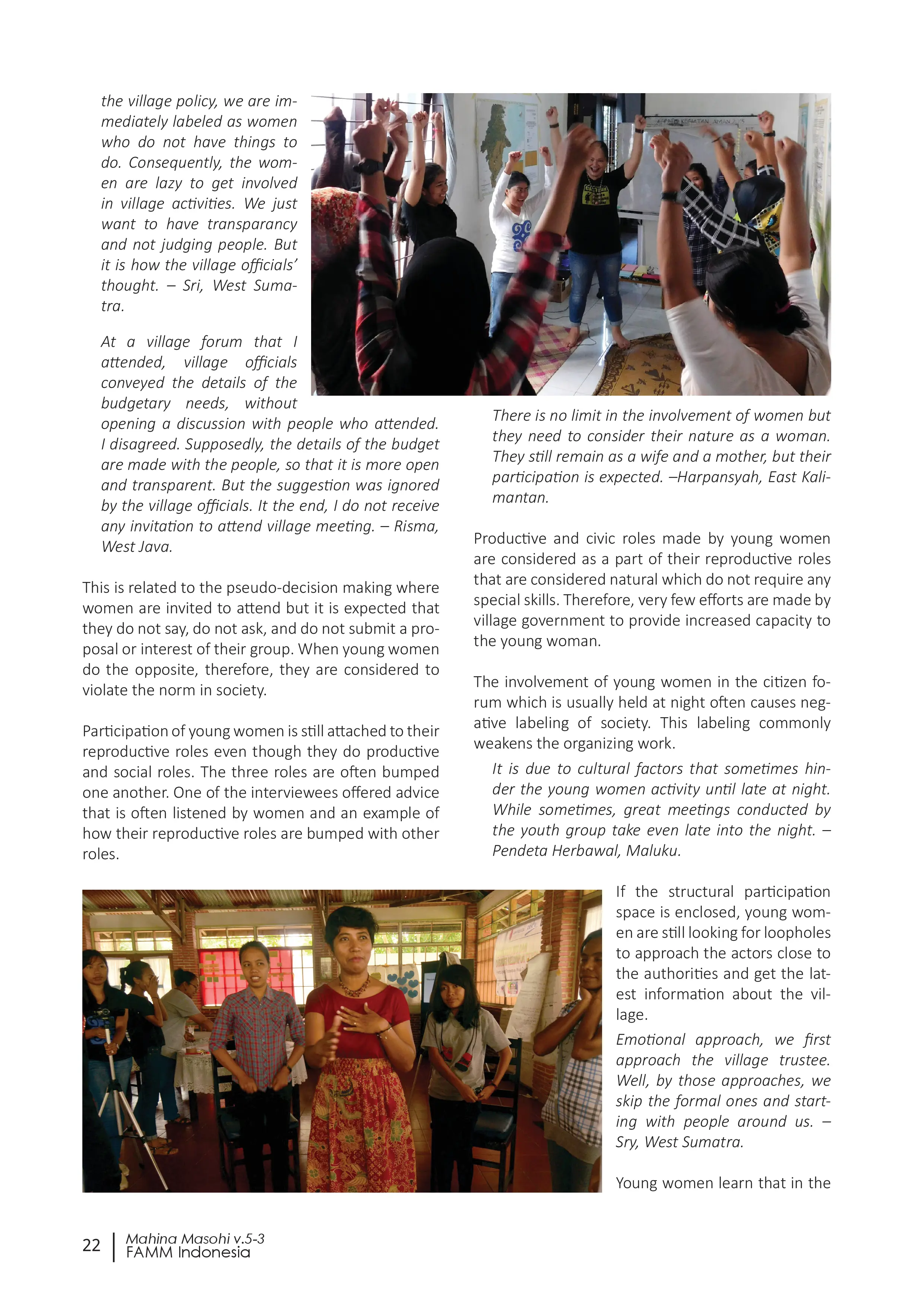
Organizing strategies of peer groups (horizontally)
is an effort to establish a safe space so that young
women can develop the capacity and build collective
power. This way, young women have the space for
self-actualizing and develop their potential. Commu-
nity organizing which conducted by young women
always derived from their needs and problems faced
by the community around them. It is to ensure that
people can gain benefits of their organizing work and
reduce the dilemmas that may arise.
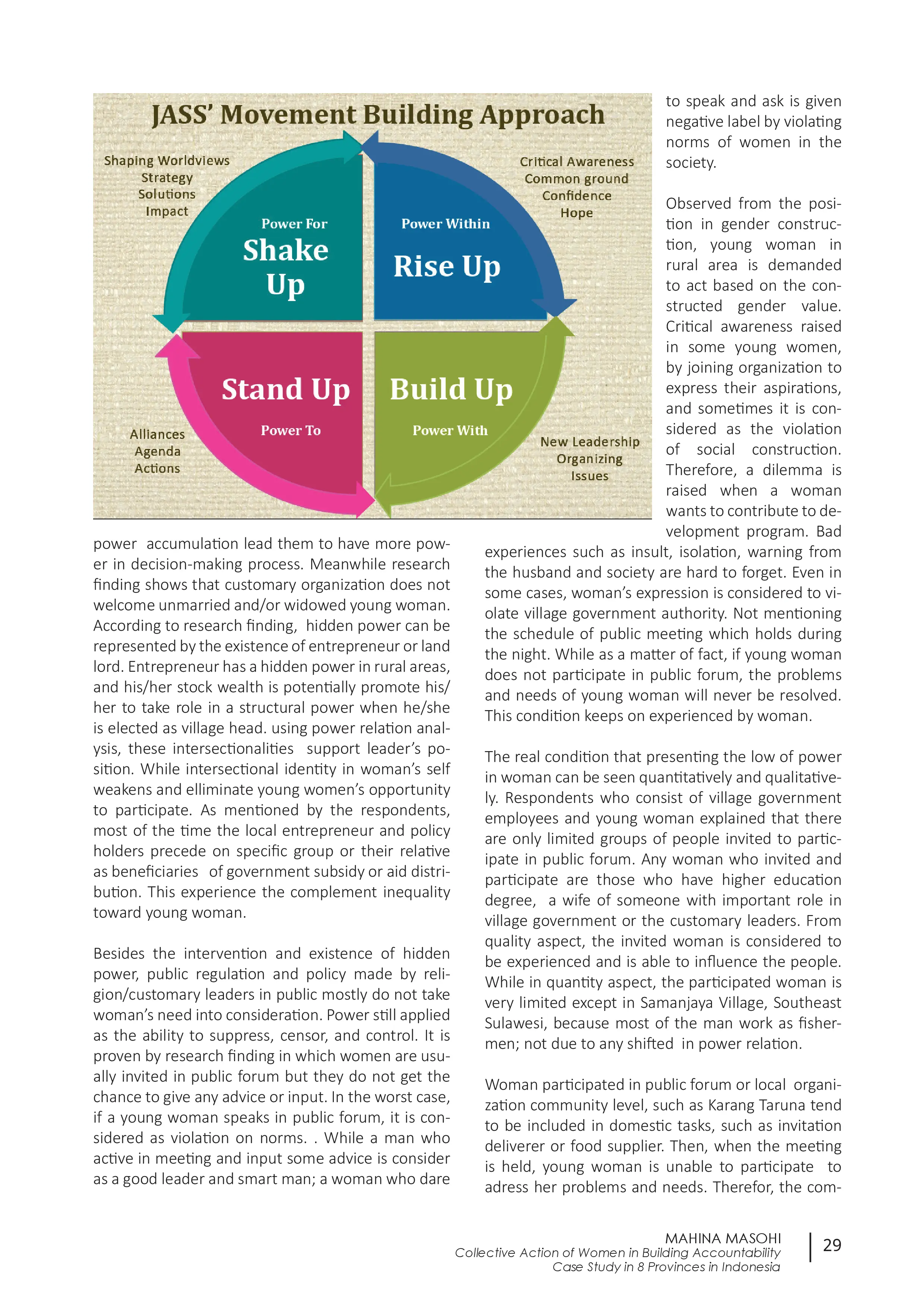
Assistance from local NGO is very important in fa-
cilitating the development of capacity, providing
an understanding about the village’s structure, and
accompanying the process of aspiration delivered
to the village officers. Support from women of pre-
vious generation and women in the village govern-
ment structure also play an important role. However,
in the unequal power relation condition, it is young
women who have to approach and establish good
relationship with village government to support the
interests of young women.
Interactive Flipbook Reader
Gunakan tombol navigasi di bawah atau seret ujung halaman untuk membalik lembaran




















Memuat...
0 Komentar
Belum ada komentar. Jadilah yang pertama membagikan pendapat Anda!